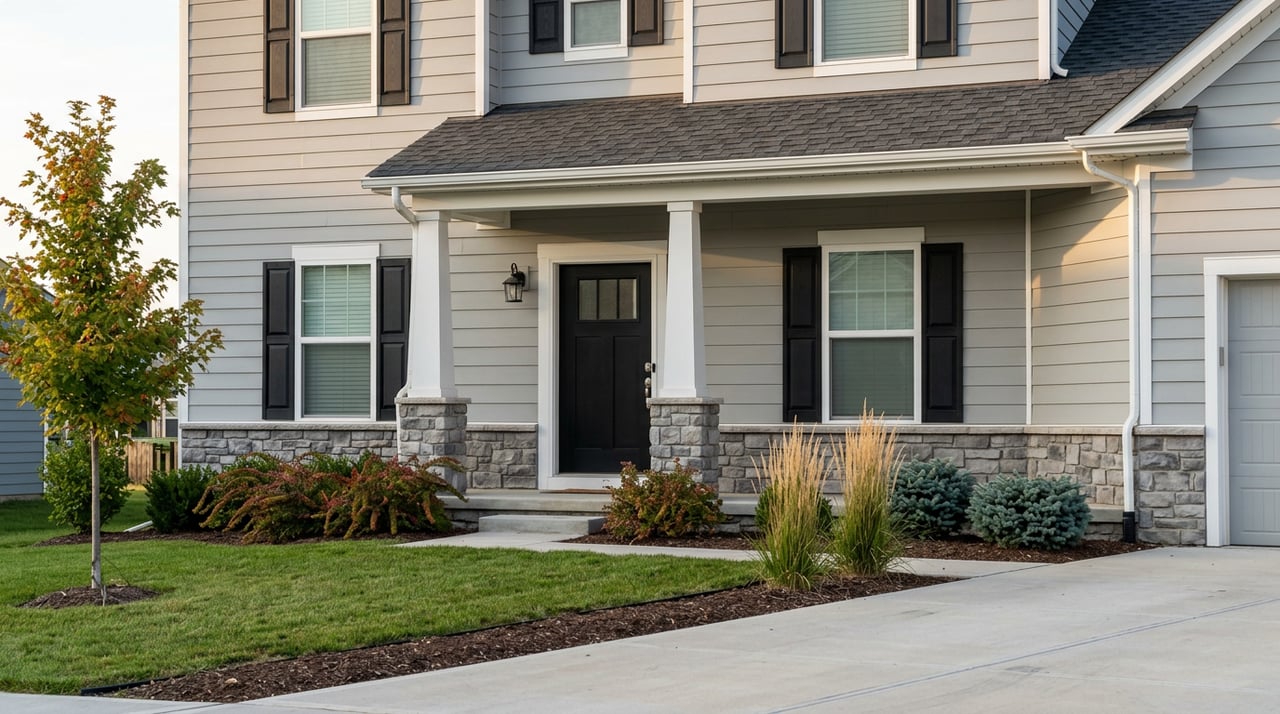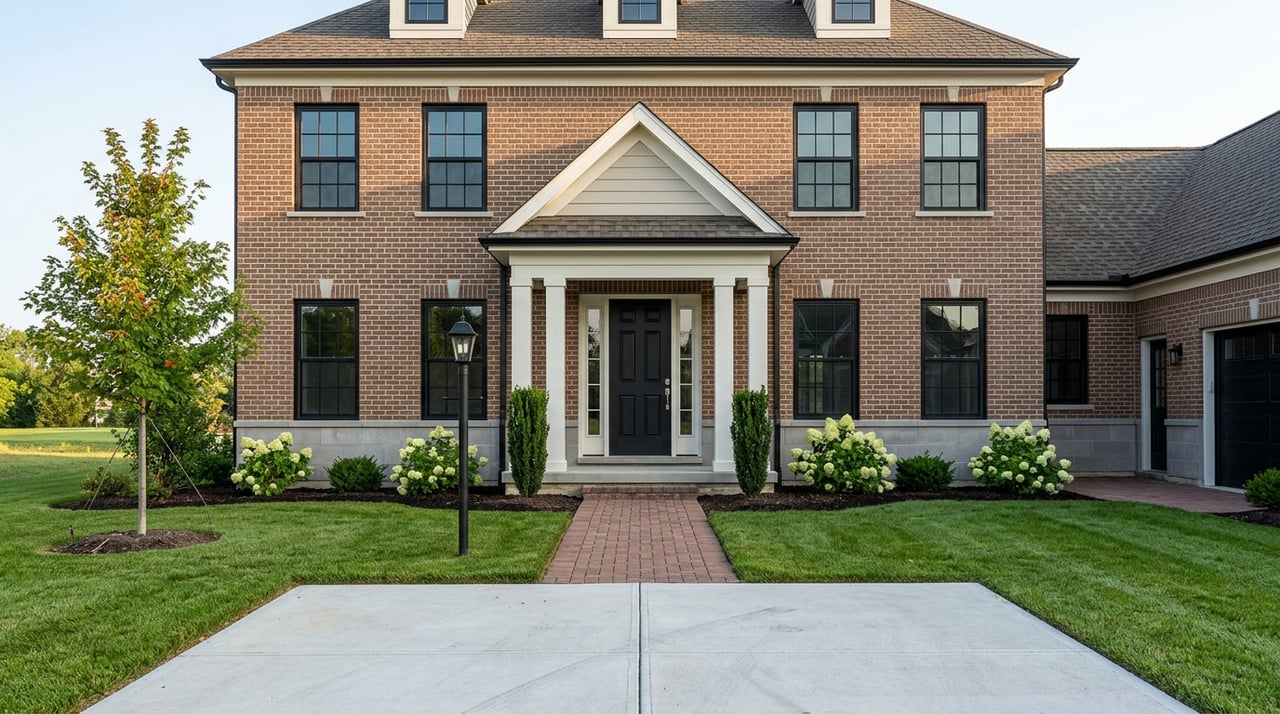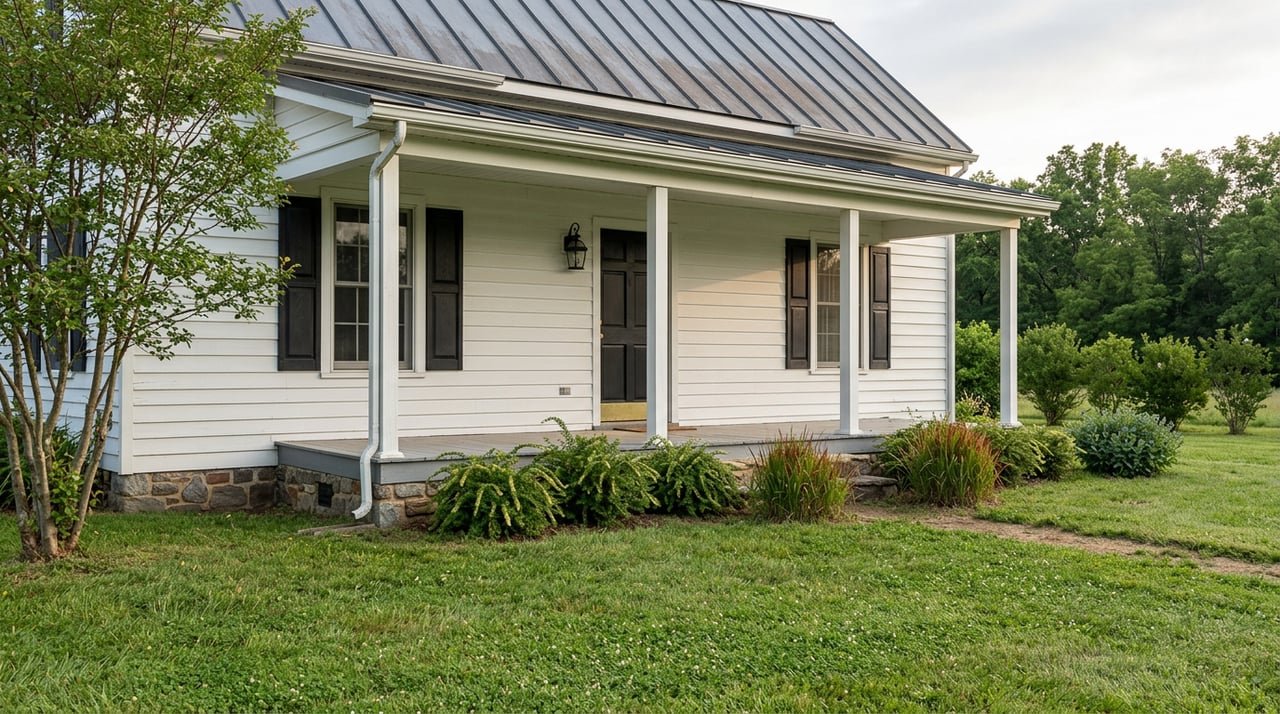
Two houses sit half a mile apart on the edge of Waynesville. Both have a "Waynesville, OH 45068" address. Both buyers assumed that meant the same utility setup. One household gets water and sewer on the same bill from the Village. The other gets a water bill from the Village too, but there is no sewer line anywhere near the property, and a septic tank sits under the side yard.
That second buyer didn't find out until the home inspection turned up a permit sticker from the Warren County Health District. Nothing was wrong with the system. The surprise was that it existed at all, on a property that looked, on paper, indistinguishable from the one down the road with full municipal service.
Here is the mechanism most buyers miss: in Waynesville, water and sewer don't travel together. The Village supplies water to residents inside its limits and to some unincorporated pockets of Wayne Township beyond them. Sewer is a different story entirely. It stops dead at the corporate line. If you're outside the Village boundary, no matter how close you are to it, you're very likely on a private septic system, even if your water comes from a Village meter. A public water bill tells you nothing definitive about what happens to your wastewater.
The Line the Listing Sheet Doesn't Draw
This isn't a quirk unique to one street. It's how Waynesville's utility footprint is built. The Village's own utility billing page states plainly that water and trash service extend to Village residents and to some unincorporated areas of Wayne Township, but sewer is available only inside the Village limits, with billing handled on the Village's behalf by the Warren County Water and Sewer Department. Water crosses the boundary. Sewer does not.
That distinction matters more than school district lines or ZIP codes when you're evaluating a property, because it determines two very different transaction paths. A home fully inside the Village limits, connected to both systems, closes the way most suburban buyers expect: a water and sewer transfer, a final meter reading, done. A home in Wayne Township, even one with Village water service, comes with an entirely separate regulatory relationship: the Warren County Health District, not the Village, oversees the septic system, and that system carries its own permit, its own inspection schedule, and its own maintenance obligations that don't show up on a standard closing disclosure until someone asks.
Waynesville's water itself comes from three wells along the Little Miami River, drawing from a well field the Village has described as sitting in an aquifer with high susceptibility to contamination, though water quality reporting has not shown evidence that contaminants from human activity have actually reached it. That's reassuring context for the water side of the equation. It has no bearing on whether your wastewater is handled by a pipe or a tank, which is the part that actually changes your closing.
The question that matters isn't "does this house have Village water." It's "does this house have Village sewer." Those are two different answers, and only one of them determines whether you'll be dealing with the Warren County Health District before you can close.
What a Septic Property Actually Means for Your Timeline
If the house you're considering sits outside the sewer boundary, here's what the Warren County Health District's own septic system guidance says will apply to you, based on the type of system already installed.
| Non-discharging (conventional) system | Discharging system (including aerobic treatment units) | |
|---|---|---|
| Operating permit length | 10 years, the longest the code allows | 3 years |
| Who inspects | WCHD staff, within one year of installation and every three years after | WCHD staff, on the shorter 3-year cycle tied to the permit |
| Can the WCHD visit be skipped | Yes, if a registered service provider performs a full inspection and the homeowner submits that record to WCHD | Same waiver applies |
| What this means for a buyer | Ask when the last WCHD or private inspection happened and where in the 10-year window the property sits | Expect more frequent official touchpoints and plan for the associated cost over time |
A conventional gravity system on a 10-year permit can feel almost invisible if it was installed recently and maintained well. A discharging or aerobic system on a 3-year cycle means the property has already been through more regulatory check-ins, and will continue to, which is worth factoring into your long-term ownership cost even if the system passes every inspection with no issues.
The Warren County Engineer's own SepticSmart guidance recommends having a tank inspected and pumped every three to five years regardless of permit type, as routine maintenance rather than a compliance trigger. That's a good baseline for any septic-equipped property, Village water or not.
On the practical side, sellers with a septic system often have the tank pumped before closing anyway, since a real inspection typically requires pumping to check for cracks or damage in the tank walls. Handling both at once means the buyer starts ownership with a system that has been checked and emptied, rather than inheriting whatever the previous household left behind.
If a septic system does need replacement, homeowners across the Warren County corridor, including Springboro, Lebanon, and Franklin, generally see permit application fees in the $200 to $500 range and a total timeline of four to eight weeks from initial site evaluation through a signed-off, functioning system, according to installers who work the area regularly. Waynesville itself has at least one locally based, WCHD-listed installer, Alan White Excavating, which is worth knowing if a pre-purchase inspection turns up work that needs doing before you close.
Five Questions Worth Asking Before You Write an Offer
- Is this address inside the Village of Waynesville's corporate limits, or in unincorporated Wayne Township? The Village office can confirm this directly, and it's the single fact that determines everything else on this list.
- If the property has Village water, does it also have Village sewer, or is wastewater handled by a private septic system? Don't assume one implies the other.
- If there's a septic system, what type is it, conventional or discharging, and when was it last inspected or pumped? This tells you where the property sits in its permit cycle.
- Has the current WCHD operating permit inspection been waived through a private registered service provider's report, and if so, do you have a copy of that report?
- If the system is aging or undocumented, what would a full soil evaluation and system design cost to plan for eventual replacement, and who locally handles that work?
None of these questions should slow down a well-prepared offer. They just need to be asked before the offer, not discovered during it.
A Few Straight Answers
If a home has Village water, can I assume it has Village sewer too? No. Village water extends into some unincorporated parts of Wayne Township, but sewer service is limited strictly to properties inside the Village's corporate limits. Confirm both separately.
Who do I call to find out if a septic system needs work before I close? The Warren County Health District handles septic permitting and inspection records for the whole county, including Waynesville and Wayne Township. They can tell you what's on file for a specific parcel.
Does a septic system mean the property is a worse buy? Not inherently. A well-maintained conventional system on a fresh 10-year permit can be a non-issue for a decade. The cost only shows up if the system is old, undocumented, or on the shorter discharging-system cycle without recent records to show for it.
How often should a septic tank actually be pumped? The Warren County Engineer's office recommends every three to five years as routine maintenance, separate from any official inspection cycle.
Whether a property sits inside Waynesville's Village limits or out in Wayne Township changes more than your utility bill. It changes who you're dealing with at the county, what paperwork exists on file, and how much homework you should do before closing. I walk buyers and sellers through exactly this kind of infrastructure question as part of every transaction, because the address on the listing rarely tells the whole story.
If you're evaluating a property near Waynesville and want a clear read on what's actually running under the yard, Juliet Wenzler and the Wenzler Concierge Group would be glad to help. Schedule your complimentary concierge consultation and we'll walk the specifics with you before you write an offer, not after.